The case for bringing Smarta in at the start — and why it changes everything
If you're a builder, architect, or designer working on high-end residential projects in Queenstown or Wānaka, you already know how complex the technology scope has become.
Ten years ago, a new build needed an electrician and maybe a TV on the wall. Today, the client brief includes lighting scenes, home theatre, multi-room audio, Control4 automation, CCTV, automated gates, security, whole-home networking, EV chargers, and a dozen brand preferences they found on Instagram. Each of those systems touches the others. All of them need to be planned before the first slab is poured.
The traditional approach — engage a technology company once the build is nearly finished — creates real problems. Cable runs get missed. Equipment rooms are too small. The Control4 rack ends up in the wrong cupboard. Conduit that should have been run at first fix costs three times as much at second fix. Worst of all, the client's expectations were set at the beginning of the project, and the technology either delivers on them or it doesn't.
There's a better way. And it starts with one phone call, early.
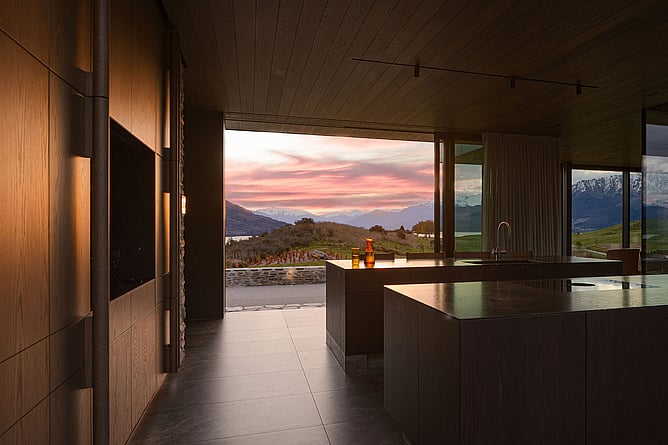
The full technology scope of a premium Queenstown build
The full technology scope of a premium Queenstown builBefore we talk about process, it's worth stepping back and looking at what modern high-spec homes actually require from a technology perspective. The list is longer than most people realise until they're in the middle of a build.
Electrical infrastructure — the foundation everything else sits on. Switchboard specification and load calculations need to account for EV chargers, solar, heat pumps, induction cooking, and home automation loads that simply didn't exist on residential builds a decade ago. Get this wrong at design stage and you're looking at switchboard upgrades and rewiring later.
Home automation — the central nervous system of a smart home. Control4 and Crestron systems bring lighting, AV, climate, security, and access control into a single interface. But they only work well if the cabling infrastructure underneath them is right. Automation programming comes last; automation cabling comes first.
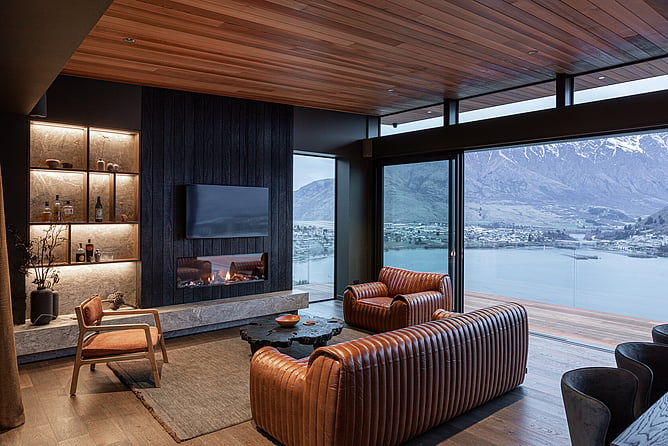
Lighting design and control — one of the highest-impact elements in any luxury home. Architectural lighting that responds to scenes and schedules, motorised blinds that adjust with the angle of the sun, and outdoor lighting that activates on approach. All of this needs to be designed alongside the architecture, not after it.
Audio visual — multi-room audio through the house and outdoor areas, a dedicated home theatre or media room, TV installations that disappear into the architecture. Speaker placement, acoustic treatment, and cable runs are architectural decisions as much as they are technology decisions.
Security and CCTV — camera placement, intercom locations, and alarm zones need to be considered at design stage, especially on larger properties where cable runs are significant.
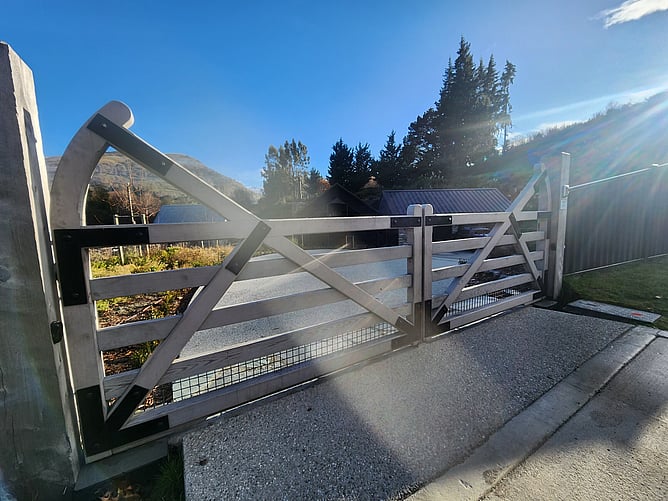
Access control — automated driveway gates, intercom systems, keypads, and bollards. On a premium Queenstown property, the gate is often the first impression. The electrical and control infrastructure for it needs to be in the ground before the driveway is poured.
Networking and WiFi — whole-home networking infrastructure using enterprise-grade equipment. Access point locations, cable routes, and equipment room placement need to be designed alongside the building.
EV charging — a standard inclusion on any premium new build now. Pre-wiring at rough-in costs a fraction of what a retrofit costs later. It should be on every build specification.
What goes wrong when technology is left to the end
Every experienced builder has a version of this story.
The client has been living with their vision for two years. The mood board has lighting scenes, a stunning home theatre, and gates that open as they arrive. The build is finishing. The technology company is called in.
And immediately, things get complicated.
The media room is the wrong shape for the screen size the client wants. The equipment rack location doesn't have the right cable access. The intercom wasn't pre-wired so now it's surface-mounted instead of flush. The client wanted in-ceiling speakers in the outdoor area but the ceiling is already lined. The gate automation conduit wasn't run under the driveway and the driveway is sealed.
None of these are anyone's fault exactly — they're the natural result of technology being treated as a fit-out item rather than a design input. But someone has to have the difficult conversation with the client. And it's usually the builder.
When a technology company is brought in at design stage, these problems simply don't happen.

How the Smarta process works for builders and architects
We've refined our process to make working with us as smooth as possible for the project team. Here's what it looks like in practice.
Stage 1 — Design consultation (concept/consent stage)
The earlier you bring us in, the better the outcome and the lower the cost. At concept stage, we sit down with you and the client to understand the full technology vision. We then produce a technology design document that covers:
Full cable schedule and conduit requirements for all systems
Equipment room size and location requirements
Lighting design input — fixture types, zone layout, dimmer specifications
Speaker locations and speaker cavity requirements
Screen size and projector throw distance for any media spaces
Gate, intercom, and access control requirements
Network infrastructure design
EV charger circuit requirements
This document feeds directly into your consent drawings and your electrical specification. It eliminates surprises.
Stage 2 — Specification and quoting
We provide a full itemised specification for the technology scope. This means you can tender the package accurately, the client knows exactly what they're getting, and there are no variations because of scope creep or "we assumed that was included" conversations later.
We work with your preferred brands or recommend systems suited to the project. We're authorised Control4 and Crestron dealers, and we have strong relationships with all the major technology brands.
Stage 3 — First fix (rough-in)
During the construction phase, we install all cable infrastructure, conduit, back boxes, and rough-in components. This is coordinated with your build schedule — we're on site when we need to be, and we don't create delays.
Our team are qualified electricians as well as technology specialists, which matters on site. We understand build sequencing, we work cleanly, and we communicate with your site team.
Stage 4 — Second fix and systems installation
Once the build reaches second fix, we install all visible components — switches, outlets, keypads, speakers, screens, and equipment racks. This is when the technology starts to take shape.
Stage 5 — Programming, commissioning, and handover
We program and commission all systems to the client's preferences. This is where Control4 or Crestron comes to life — lighting scenes are set, automation sequences are programmed, and everything is tested end-to-end. We then walk the client through their system and provide ongoing support.
The real advantage: one point of contact
When a builder manages multiple technology sub-contractors — a separate electrician, a separate AV company, a separate security company, a separate automation company — coordination becomes a full-time job. Cable conflicts, blame for missed items, and scheduling complexity multiply with every additional contractor on site.
Working with Smarta means one contract, one point of contact, and one team responsible for the complete technology outcome. If something needs to change, you make one call. If there's a problem, there's no finger-pointing between contractors — we own the outcome.
For architects and designers, it means your technology specification is in the hands of someone who understands how technology needs to work with the architecture, not around it. We're not trying to route cables through spaces that don't exist. We're not retrofitting equipment into rooms that weren't designed to house it.
Why early involvement protects your project
The conversations that save the most time and money happen before consent. They're conversations like:
"The client wants a 4.5-metre screen in the media room — the current room layout won't work for that projection throw distance."
"The outdoor terrace ceiling height won't work for the in-ceiling speakers they want — let's look at alternatives now."
"The gate is 40 metres from the house — if we don't run conduit now, that's a significant cost to do it after the driveway is sealed."
These aren't difficult conversations. They're just conversations that need to happen before the build is locked, not after.
Bridger Automation, one of Australia's most respected residential technology companies, puts it clearly: with a combined industry background of over 100 years, they design every solution with the client's vision at the forefront, starting with a strong foundation and understanding of the desired outcome. That foundation is always laid at design stage.
Wired by MJD, CEDIA's award-winning Melbourne integrator, go further — they note that engaging an integrator too late can lead to unnecessary complications and changes in either the design or function of the home. They're often specified by architects as the integration contractor from the start, meaning one point of contact for all home technology across the entire project.
This is exactly how we work at Smarta. And it's the model that delivers the best outcome for your clients — and the smoothest build experience for your team.
Working with us on your next project
If you're in the early stages of a project — whether it's at concept, consent, or even tender stage — we'd welcome the conversation. The earlier we're involved, the more we can contribute, and the better the result.
We work across Queenstown, Wānaka, and the wider Queenstown Lakes district. We're experienced with the local build environment, the calibre of projects being delivered here, and the level of finish that your clients expect.
Bring us in early. One partner. Full scope. Done properly.
Get in touch: 021 676 242 | info@smarta.co.nz
Smarta Automation are authorised Control4 and Crestron dealers, CEDIA members, and qualified electricians serving Queenstown and Wānaka. We specialise in high-end residential new builds, retrofits, and commercial projects.